Sunday, March 22, 2026
Fifth Sunday in Lent
Text: Romans 8:1-11
Sermon Audio
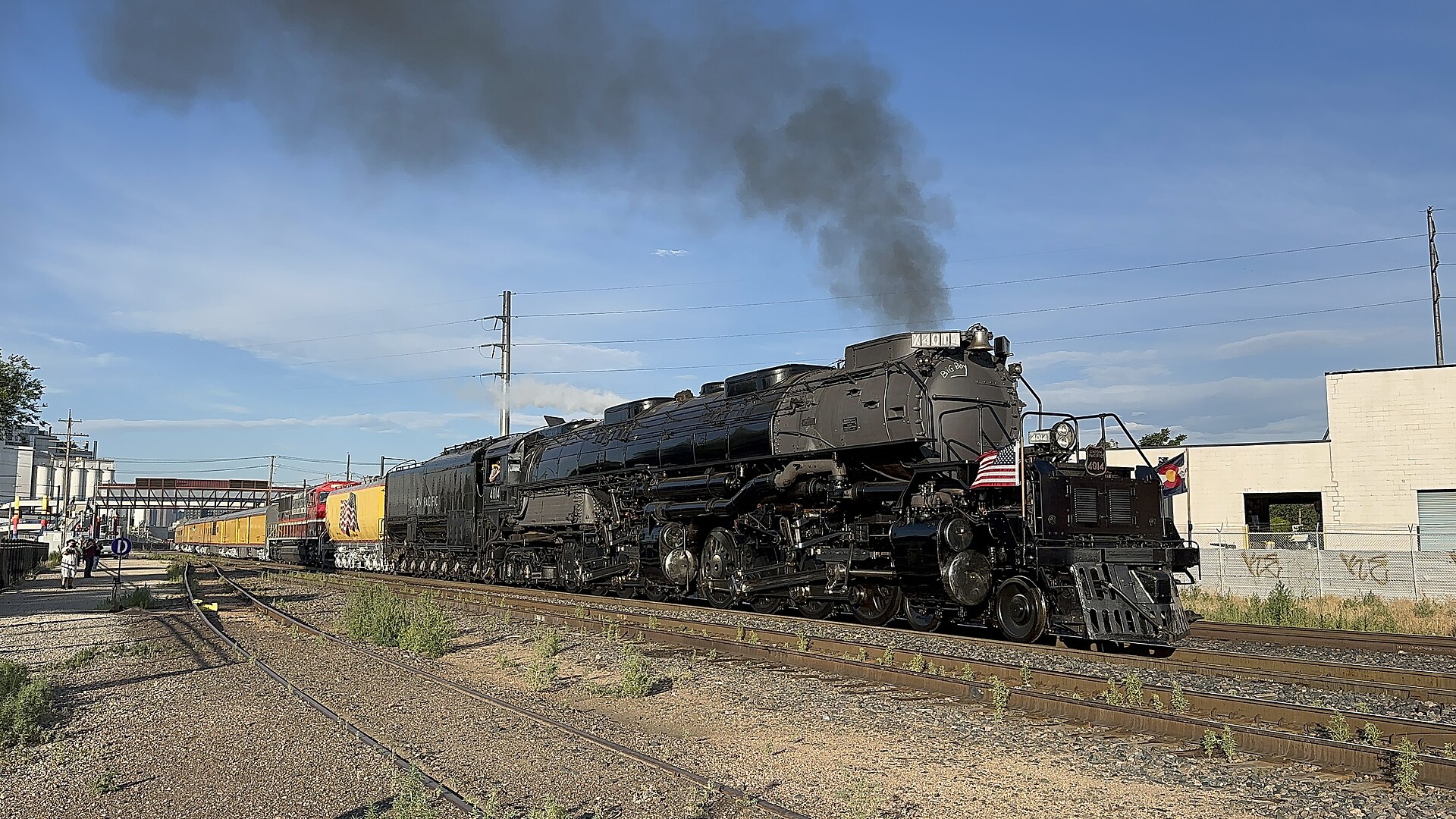
As we gather… In the early 1900s, an old train conductor who has only run coal burning steam trains sees a diesel powered train for the first time. After the manufacturers give the conductor a tour of the train, the old conductor asks, “The advance of technology is amazing! Where do you dump the ashes when the diesel is spent?” Certain questions just don’t apply, and certain questions just don’t make sense when you change the very way you run things. So it is with life by the Spirit compared to life by the flesh. Paul compares and contrasts these two very different ways of life in Romans 8. Those who live by the old ways of the flesh ultimately will die, but those who live by the Holy Spirit will life forever. These two ways of life are polar opposites, and yet, the Holy Spirit daily shifts our way of thinking to conform ourselves to that image of Christ.
Grace, mercy, and peace from God our Father and our Lord and Savior, Jesus Christ.
A paradigm shift means a fundamental change in approach. It means doing things completely differently. For much of the 19th century, steam powered trains dominated the railroads of the United States. With steam came all the infrastructure that came with steam: water stations to refill the steam engine, coal to burn in the furnace, and locations to dump off the ashes.
In the early 20th century, diesel engines revolutionized the railroad industry. The railroad industry quickly experienced a paradigm shift. To illustrate this, one railroad executive showed his conductors the new fleet of diesel-powered trains that would run special routes designed for the new technology. When an old conductor looked at the routes that the executive wanted him to run, he asked, “I see these routes have no water towers, coal depots, and no ash pits. How do you expect me to run this route without them?”
In our Epistle text, Paul describes the paradigm shift that takes place when we live life by the Spirit compared to life by the flesh. In today’s sermon, we will explain the differences between the two ways of life. Today we learn: THE FATHER SENT HIS SON INTO THE FLESH SO THAT WE CAN LIVE BY HIS SPIRIT.
First, I. Life by the flesh means fleshly desires, hostility to God, and death. Steam power had its disadvantages. Coal was bulky and hard to transport. It wasn’t always easy to get water to remote places to fill up the steam engine. The solid waste the trains produced would fill landfills with ashes. A paradigm shift was due.
Paul writes in our Epistle text, “Those who are in the flesh cannot please God.” He gives three aspects of the shortfalls of being in the flesh.
First, Paul writes, “For those who live according to the flesh set their minds on the things of the flesh.” This helps explain what it means to be in the flesh. To be in the flesh is not simply to have a human body. Rather, it means to be fueled completely by our base desires. It’s to live like an animal. Get dopamine hits from filling up on food and drink. Feel pleasure by getting a raise. Feel a sense of satisfaction by mindlessly shopping online. Satisfy your sexual desires in any way you see fit. The person fueled by fleshly desires sets his sights on more fleshly desires: rinse, wash repeat.
Furthermore, “For the mind that is set on the flesh is hostile to God, for it does not submit to God’s law” How much coal can you put into a diesel engine to get it from point a to point b? The answer is not more coal, but to switch fuel. This animalistic selfish gratifying of fleshly desires is against the way the Lord has made the world to work.
That doesn’t mean that we no longer have physical needs. We still need to eat and drink, have warmth and shelter, and so on. Nonetheless, when we live life only for these things and only live for the next meal, the next paycheck, or the next high we soon forget spiritual things.
In fact, the mind set on the flesh hates God for even mentioning there might be more than this. Not only can the mind set on the flesh not please God, but it actively rebels against any other way than the selfish desires.
Finally, “For to set the mind on the flesh is death” the way of the flesh ultimately leads to death. The irony of this self-serving fight for survival is that it leads to death, not only physical death, but spiritual death. Those who die apart from God and His Spirit spend eternity in hell.
However, II. God sent His Son into the flesh to condemn life by the flesh. Paul writes, “For God has done what the law, weakened by the flesh, could not do. By sending his own Son in the likeness of sinful flesh and for sin, he condemned sin in the flesh,” Jesus Christ came to this earth to demonstrate the futility of this life by the flesh and to defeat this way of death.
Sometimes a paradigm shift takes some trickery. The invention of the shopping cart was seen as too much like a baby stroller, and it took the inventor paying actors to walk around the grocery store and pretend to shop in order for people to catch on to this better way of doing things.
Ancient theologian Gregory of Nazianzus said of Jesus, “What has not been assumed has not been redeemed.” Thus, Jesus took on all our aspects of humanity: mind, body, and soul, and redeemed them. In becoming human, He directed His mind to right things and serving others. He used His body to serve other people: His hands healed, His words inspired, and His body itself became a sacrifice for our sins. In this life, He used His soul to serve us, as He gave up His life for our ransom.
It is through this perfect man that sin, death, and fleshly desires were condemned and shown to be what they truly were—utterly sinful and flawed. Satan saw Jesus in the flesh. Satan saw Jesus on the cross, and on the cross Jesus took on the sins of the world. Satan saw this shameful display and condemned Jesus to death. Sometimes a paradigm shift takes some trickery.
Satan, that great accuser, himself was accused and defeated by wrongly sentencing Jesus to death. Jesus’ resurrection demonstrates the Father’s declaration of not guilty to Jesus and at the same time, it is the Father’s declaration of guilty to sinful flesh, death, and the devil.
Because of Jesus’ birth, life, death, and resurrection, there has been a paradigm shift from life by the flesh to life by the Spirit. Let’s learn about that now.
Next, III. God sent His Son that we can live life by His Spirit. Paul writes, “There is therefore now no condemnation for those who are in Christ Jesus. For the law of the Spirit of life has set you free in Christ Jesus from the law of sin and death.” We have hope! Because Christ was wrongly condemned, we escape the punishment from our sins of the flesh. Because Jesus lived a life here on this earth by the power of the Holy Spirit, we no longer need to live by the old way satisfying the desires of the flesh which only lead to becoming an enemy of God and ultimately to eternal death.
Turning a coal-powered train into a diesel-powered train is not simply re-routing a few pipes or flipping the right switches. It requires taking out the old engine and putting in a completely new one. The change from life by the flesh to life by the Spirit is such a radical paradigm shift.
What a great thing to see a baptism today. We give thanks for Henry Robert, and we pray that he would continue to grow in the faith as he grows physically. As we witness baptism, we also remember our own baptism and what it means. Namely, Paul writes in Romans 6 that baptism means that we have died with Christ in baptism, so that we can rise with Christ to walk with Him in a new way of life.
In baptism, the Lord has taken out our heart of stone and replaced it with a new heart that has new desires. But the old sinful self has a hard time giving up the ghost. He keeps on trying to claw back to the futile ways of the flesh. Yet, in baptism, the old self is continually drowned out day by day, and a new man arises to live life by the Spirit, even if this is a daily struggle.
Finally, IV. Life by the Spirit means Spiritual desires, love of God, and eternal life. Diesel locomotives revolutionized the railroad industry, and it was hard to see how anyone could go back to the old ways of steam powered trains.
In our Epistle text, we see the many blessings of life by the Spirit. “those who live according to the Spirit set their minds on the things of the Spirit” By the Holy Spirit working in our hearts through God’s Word and Sacrament, we can no longer simply live until the next payday, but see that we have a higher purpose in serving our Lord Jesus Christ and serving others. We can suffer hunger, disappointments, and saying no to certain luxuries for the sake of others.
We can suffer because we know that we have God’s love. “There is therefore now no condemnation for those who are in Christ Jesus.” We are loved and we are friends with the God who became flesh for us. We are no longer enemies.
What’s more, with life by the Spirit, we have eternal life, “but to set the mind on the Spirit is life and peace” and “If the Spirit of him who raised Jesus from the dead dwells in you, he who raised Christ Jesus from the dead will also give life to your mortal bodies through his Spirit who dwells in you.” Because of life in the Spirit, this life is not all that there is. We have the hope that even in suffering, there is more to come. A lot more. We have the promise of eternal life in Christ Jesus, and that fact is a paradigm shift that changes lives. In the face of death, we too will rise. What a great blessing!
The peace of God which passes all understanding guard and keep you in the true faith unto life everlasting. Amen.