Sunday, June 7, 2026
Second Sunday of Pentecost
Text: Hosea 5:15-6:6
Sermon Audio
As we gather… The book of Hosea describes the ministry and contains the prophecies of Hosea, the servant of the Lord. He ministered to Israel, the northern kingdom, calling them to repentance. In this turning point of Hosea’s prophecy, we see the love of the Lord for His people, both the northern kingdom (Ephraim) and the southern kingdom (Judah). We see the way the Lord works in destroying in order to mend. The Lord will let both kingdoms suffer military defeat and exile, and Judah will eventually be restored. In this same text, we also see a foreshadowing of Christ. The Heavenly Father would let His own son be torn and struck down so that He could heal Him and bind Him up. In Jesus’ life, death, and resurrection, He redeems all of God’s people past, present, and future, and He invites us to live a life of steadfast love and knowledge of His care for us.
Alleluia! Christ is risen! Grace, mercy, and peace from God our Father and our Lord and Savior, Jesus Christ.
This is one of the few times that we read from Hosea in our lectionary system. Perhaps not many of you know the first thing about the book of Hosea. A little introduction: the book of Hosea is in the Old Testament and is one of the twelve minor prophets called such not because the book is less important, but because it is a shorter book than other prophetic books such as Isaiah and Jeremiah. Hosea preached to the northern kingdom known as Israel or Ephraim which was straying from the way of the Lord.
Our text records one of the most remarkable passages from the book of Hosea. Let me re-read this core verse: ““Come, let us return to the LORD; for he has torn us, that he may heal us; he has struck us down, and he will bind us up.”
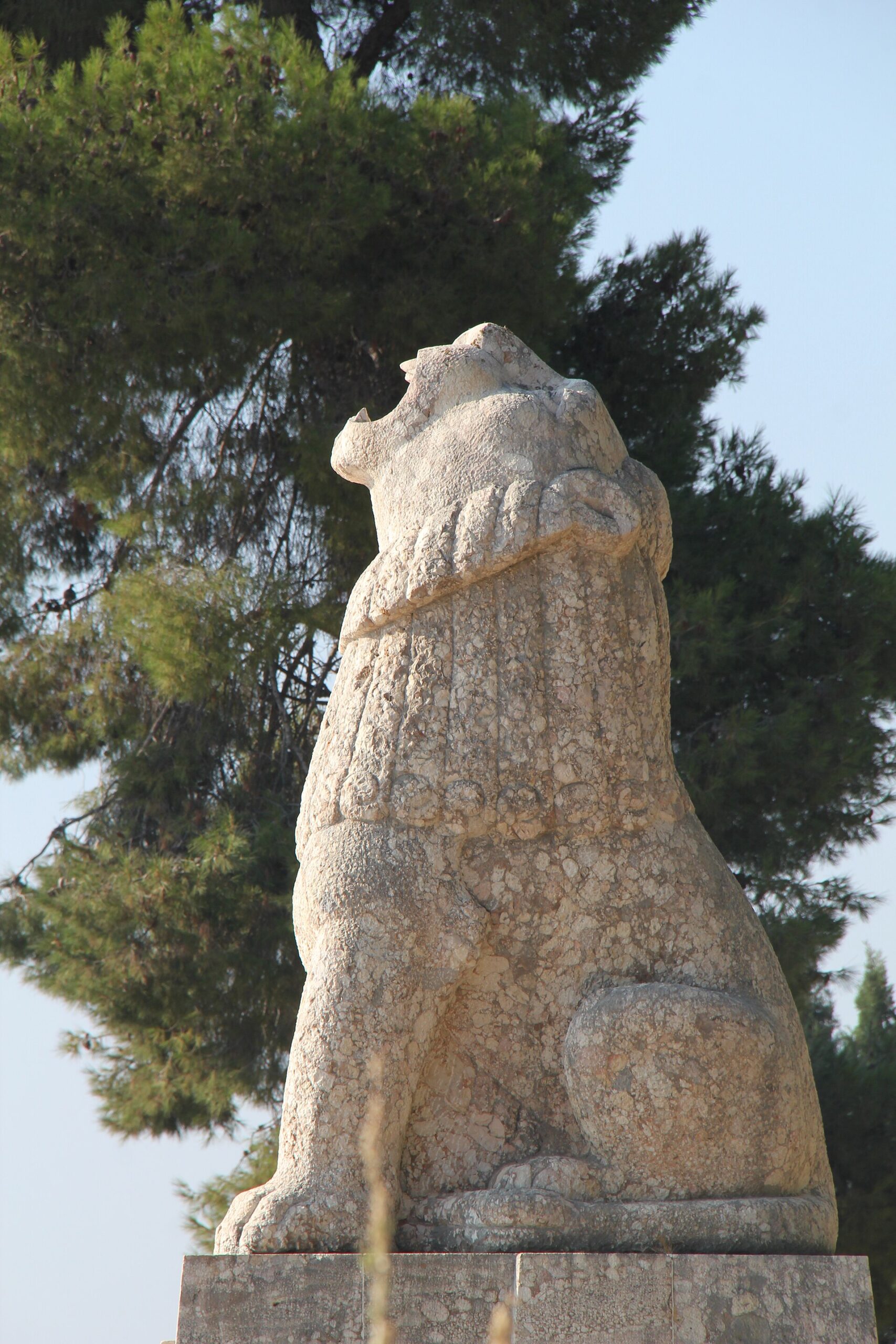
Now, we might wonder: “Does God really need to tear us?” That seems pretty uncharacteristic of our God. I thought He was a God of love and not of violence. I thought He healed; He didn’t destroy. What’s worse, this word tear is the word that is used in the Hebrew Old Testament to describe what a wild animal does. Is our God like a bear or wild cat? When a mountain lion comes down from the bluffs, you don’t play with it, you call animal control.
My life isn’t so bad, is it? Sure, I’ve made mistakes, but not anything so serious that God would need to tear me. Sure, I skip church here and there. I go over the speed limit when I’m running late for work. Now that it’s swimsuit season, sometimes I enjoy the view at the pool or the beach. Is that so wrong? God made the human body beautiful so we could enjoy looking at it. Yeah, I fudged my taxes a bit, but I haven’t been audited yet, so the IRS kind of bakes in those losses anyway. I’ve indulged in a bit of gossip, but what I shared was probably true.
The people in the Northern Kingdom of Israel probably thought the same thing about themselves. Altogether, times were good. There was relative economic prosperity and there was peace. It was easy to take that data and say that the Lord must have been smiling upon them. It didn’t matter that the northern kingdom was founded on God’s people breaking away from the more faithful southern kingdom. It didn’t matter that they were also worshipping false gods such as Baal or Asherah alongside the true God. It didn’t matter that they oppressed the poor. Was it really so bad?
Apparently the Lord thought so. In an unconventional move, the Lord commanded the prophet Hosea to marry a prostitute as an illustration of how seriously He took their sin. Hosea’s wife Gomer would go on to have children named No Mercy and Not My People to prove how serious Israel’s sins were. Thus, we read, “Therefore I have hewn them by the prophets; I have slain them by the words of my mouth, and my judgment goes forth as the light.” The Lord used prophets such as Hosea to warn them and to tear them because judgment was coming, within half a century of Hosea’s ministry, foreign invaders would destroy the northern kingdom.
In our text, the Lord mourns over the faithlessness of his people Judah, the southern kingdom and Ephraim, the northern kingdom. We read, “What shall I do with you, O Ephraim? What shall I do with you, O Judah? Your love is like a morning cloud, like the dew that goes early away.” And this image gives us a hint of nature of the problem. Does God really need to tear us? Yes.
It’s really easy to minimize our sins saying they’re not that bad. It’s really easy to give lip service to being a Christian and following Jesus just as the people of the northern kingdom did in Hosea’s time. However, the Lord cuts to the heart of the matter. Just as dew or morning fog may only give the appearance of water, but not the substance, so too, our half-hearted attempts at pleasing God and plastering over our sins are just that. The solution is not a quick fix or just saying a couple simple prayers. The Lord needs to tear us to make us whole again. 3. God tears us because our love is like morning dew.
The tearing does indeed come. The Lord would punish both the northern kingdom Israel and the southern kingdom Judah with foreign armies. Israel would be invaded and dispersed, never to regain its former glory. Judah would go into seventy years of captivity and when they returned, they would be a shell of what they were in the time of David. The Lord tore them, but He had greater plans than a temple or a nation on a map. He had plans to heal them.
The Lord tears us so that we can be spared from the death that our sins cause us. Skipping church when our sport is in season runs the risk of skipping in the off season to forgoing any kind of worship altogether until belief in God becomes less important than Sunday’s brunch. Disregard for the rules of the road can lead to more than just a speeding ticket. Careless driving can lead to death for ourselves or others. Unchecked lust at the beach can lead us down a dark path: turning us away from the love of our spouse and eventually onto the crime report during the ten o clock news. Just because you haven’t been audited yet doesn’t mean you won’t next year, and entire fortunes have been erased by those who thought the IRS would never know. We may get a bump of popularity through the latest gossip, but the end result is that nobody trusts you anymore and genuine friendships evaporate like the morning dew.
You may think I’m being melodramatic. “C’mon pastor, it’s a hop, skip and a jump from lusting after a woman in a bikini to getting arrested for hiding cameras in changing rooms.” But if it isn’t for the Lord tearing us and striking us down, we would easily wallow in our sins deeper and deeper until there’s no return.
We read from the lips of Hosea the prophet, “After two days he will revive us; on the third day he will raise us up, that we may live before him.” The healing and binding up that Hosea foretells is ultimately fulfilled in what Paul writes of in 1 Corinthians 15, “For I delivered to you as of first importance what I also received: that Christ died for our sins in accordance with the Scriptures, that he was buried, that he was raised on the third day in accordance with the Scriptures,”
Our God tears, but first and foremost He tears His own Son that we may be healed. “But he was pierced for our transgressions; he was crushed for our iniquities; upon him was the chastisement that brought us peace, and with his wounds we are healed.” Israel and Judah were boiled down into one person: Jesus Christ. Jesus took on their sins and ours. Jesus suffered for you. He suffered for your lack of devotion. He was stripped bare for the times you lusted after others. He carried His cross and stumbled and fell for the times you regarded just laws as mere suggestions and when you tried to convince the officer that the 53 on the sign was a speed limit rather than Highway 53. Your Savior was sold for thirty pieces of silver when you thought your theft was a victimless crime. The accusations of false witnesses condemned Jesus so that He could forgive your slander.
The Father raised up Jesus on the third day so that you could know that there’s always a way back from your worst sins and your deepest failures. The Father raised up the Son so that even as the faithful Israelites wept as Assyrians destroyed their capital, there was a greater restoration already in the works. 2. God tears us to heal us.
Hosea continues, “Let us know; let us press on to know the LORD; his going out is sure as the dawn; he will come to us as the showers, as the spring rains that water the earth.”” The Lord wants us to return to Him because unlike our fickle love, His love is steadfast and certain. The Lord tells us, “For I desire steadfast love and not sacrifice, the knowledge of God rather than burnt offerings.” The Lord tears us so that He can heal us. He strikes us so that He can bind us up.
In this healing, we see that the Lord sends His Holy Spirit upon us so that we can truly love others, not in the way that we think is loving. We can show mercy to others and share our knowledge of God to them, also.
Sometimes, this might mean acting like the prophets of old, warning a loved one or friend of the dangers of sin, but it’s always for the goal of realizing the seriousness of our sins and the need for a savior.
Other times, it means giving the healing salve of the Good news of Jesus Christ who died for sinners, but through this message, we see that we can truly give people hope and life in a world that is in need of saving. 1. God tears us to work in us the knowledge of His steadfast love.
GOD TEARS US AWAY FROM FICKLE LOVE TO HEAL US INTO THE KNOWLEDGE OF HIS STEADFAST LOVE.
The peace of God which passes all understanding guard and keep you in the true faith unto life everlasting. Amen. Alleluia! Christ is risen!