Sunday, November 8, 2026
Twenty-fourth Sunday after Pentecost
Text: Matthew 25:1-13
TAnd while [the five virgins] were going to buy [oil], the bridegroom came, and those who were ready went in with him to the marriage feast, and the door was shut. – v. 10
Lead In – Our lessons this morning focus on the culmination on the Lord’s Day of the Church’s earthly pilgrimage. The reading from Amos warns that this will be a terrifying day for those superficially going through the motions of faith without demonstrating any implications of it. For the faithful, 1 Thessalonians 4 reveals it as a day of resurrection, when believers will meet the Lord in the clouds. Finally, Matthew 25 depicts that day as a grand wedding feast, where the bridegroom arrives to escort His bride to her eternal home. Together, these scriptures point to the ultimate destiny of all baptized believers, a reality that beautifully hits home today as we celebrate the spiritual rebirth of one newly baptized and welcomed into the body of Christ.
I. The Visible Church of the Baptized
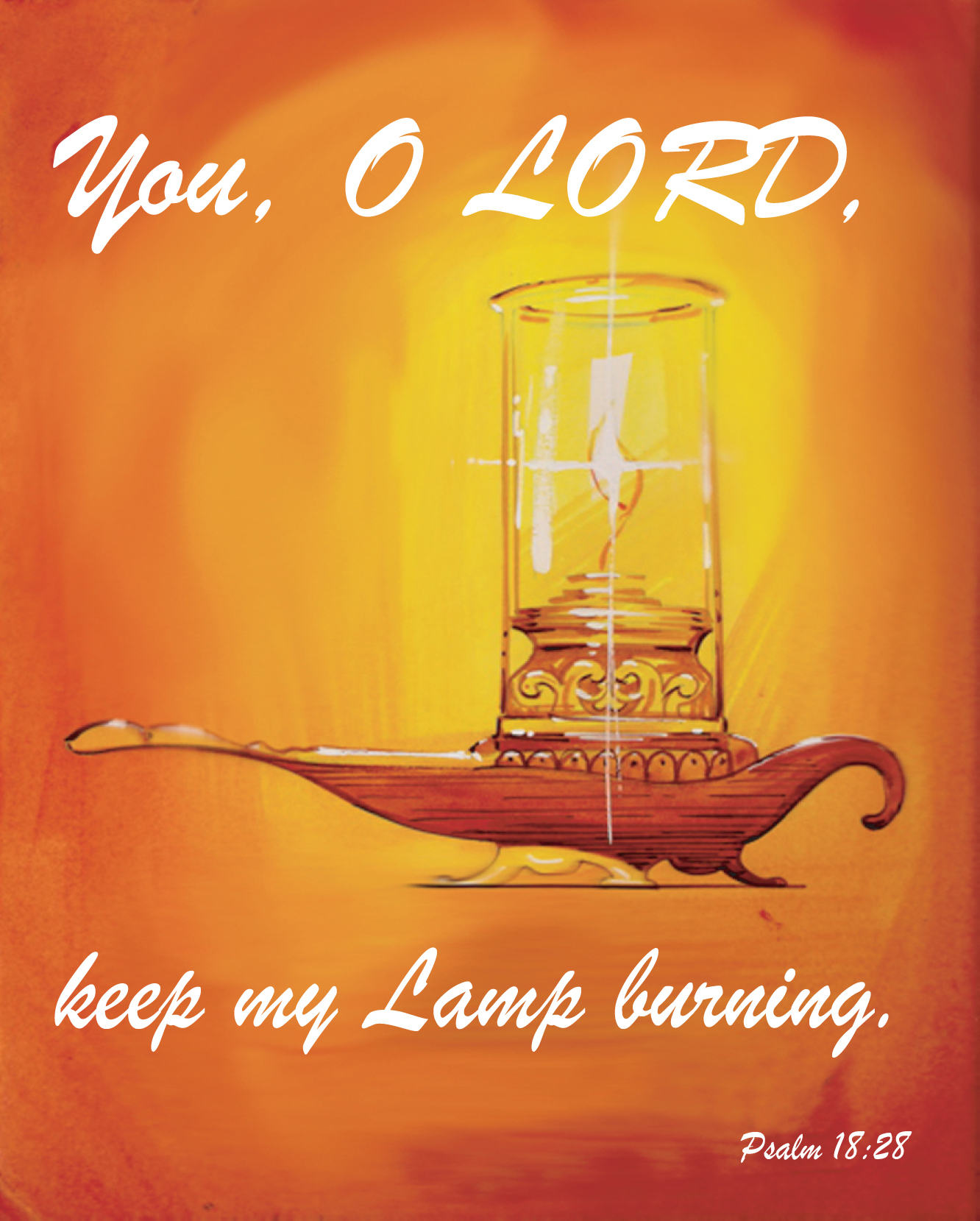
In our Gospel Reading, Jesus shares the parable of the ten virgins. Five of them were foolish and five were wise. Who do these bridesmaids represent? They represent the visible Church on earth. Notice that every single one of them carries a lamp. This imagery beautifully echoes Jesus’ command to His disciples in Matthew 5:16: “Let your light shine before others.” Did you notice that these are the very words spoken during the baptismal rite. When the newly baptized receives a lighted candle, it stands as a powerful, lifelong memento of that baptismal call to shine. But in order to shine, the lamps need oil!
Think of lamp oil as the Holy Spirit, which fuels a genuine, living faith in a baptized believer. Just as a lamp cannot burn without fuel, we cannot manufacture or produce this spiritual life on our own. The Holy Spirit is a gift from our heavenly Father, continually poured out upon us. While God’s supply is endless and without limit, we as His vessels are prone to wander. We so often fill ourselves with self-reliance and worldly distractions, leaving no room for the very presence that nurtures our walk with Christ.
In baptism, God washes our sins away, while naming and claiming us as His own. It is also helpful to think of baptism as God planting a seed of faith within us. As we know, a seed remains dormant until it receives water and nutrients, and the fledgling plant needs light to grow. Similarly, the gift of faith given in baptism will remain dormant if it is not nurtured by God’s Word. If a child is not exposed to the light of Christ reflected in other Christians, that faith cannot grow.
Young children are completely dependent upon their parents or guardians for this spiritual nurture. Parents, in turn, are encouraged by appointed sponsors and supported by the entire congregation. As time goes on, the baptized believer will naturally take on more responsibility for their own spiritual growth. Gathering for worship is a primary way God nurtures us all through His Word, in Holy Communion, and with His presence as believers gather together.
II. Mention of Being Delayed an Important Component
An intentional and compelling component of the Parable of the Ten Bridesmaids is the mention that the bridegroom was delayed. This theme of a deferred arrival appears throughout the Gospels. For instance, in the Parable of the Faithful and Wise Servant in Matthew 24, a master puts a trusted servant in charge of his household while he is away on a journey. The servant begins to think to himself, “My master is taking a long time.” Unfortunately, he misinterprets this delay as an excuse to mistreat his fellow servants, get drunk, and live selfishly. The master returns at an hour the servant least expects, resulting in severe punishment. This pattern of a delayed return is woven into several other parables. It is a strong hint in the New Testament that Lord’s return at the end of the age would be delayed
We hate waiting. And yet, it remains one of the most common human experiences. We dread bumper-to-bumper slow-moving traffic. We agonize standing in grocery lines, at the post office, or trapped in a drive-thru behind an indecisive driver. We endure mind-numbing hold music just to speak with customer support. And then, of course, there is the ultimate test of patience: the doctor’s waiting room.
But the hardest wait is waiting on the Lord. I speak both in the immediate sense when we call upon Him in prayer, and in the ultimate sense in His return at the end of the age. In 2 Peter 3:3-4 we read, “scoffers will come in the last days with scoffing, following their own sinful desires. They will say, ‘Where is the promise of his coming? For ever since the fathers fell asleep, all things are continuing as they were from the beginning of creation.’” The Apostle Peter will go on to say in verse 9, “The Lord is not slow to fulfill his promise as some count slowness, but is patient toward you, not wishing that any should perish, but that all should reach repentance.”
With delay, boredom, sloppiness, and complacency can set in. When we assume we have plenty of time, our natural tendency is to procrastinate. Instead of heeding the encouragement of Colossians 3:2 to “Set your minds on things that are above, not on things that are on earth,” we assume there will be plenty of time for that later. With attention and diligence set aside, we become distracted by the cares of this life and preoccupied with the fleeting treasures of the world. As we receive our daily bread, we forget Jesus’ words to the tempter in Matthew 4:4, “Man shall not live by bread alone, but by every word that comes from the mouth of God.” We convince ourselves there will always be time to restock our lamps with oil. But if our parable today is correct, such thinking is pure foolishness!
III. Jesus’ Parable Warns Against Complacency
I am convinced that Jesus’ parable is primarily a warning against complacency. The ten bridesmaids who, I suggest, represent members of the visible church on earth, look identical. All are equipped with lamps, but five fail to bring an extra supply of oil. How could they know the bridegroom would be delayed, or that they would become drowsy and fall asleep? Notably, all ten bridesmaids fell asleep and are not faulted for doing so. The foolishness of the five lay entirely in their failure to carry additional oil. They did not anticipate that their lamps would have to burn for so long, or that a sudden midnight announcement would require them to trim their wicks and replenish their fuel on the spot.
What kept them from having their flasks refilled earlier in the day? Perhaps the foolish bridesmaids, unlike the wise ones, had neglected the God-given means for sustaining life in Him. Isn’t the oil of the Holy Spirit replenished through these very means – by hearing God’s Word, receiving absolution, and partaking in the Lord’s Supper?
There is a difference between nominal faith and vibrant faith, between a faith that exists in name only and one that truly lives. This distinction shows up clearly in how we regard baptism. As 1 Peter 3 teaches, baptism saves us, but it does so as a seed of faith and as a new life seminally planted within us that must be nurtured as it is lived out. It is exactly as Martin Luther explains in the Small Catechism when he asks, “What does such baptizing with water indicate?” His answer captures this beautifully: “It indicates that the Old Adam in us should by daily contrition and repentance be drowned and die with all sins and evil desires, and that a new man should daily emerge and arise to live before God in righteousness and purity forever.”
Luther draws this insight from Romans 6:4 which reads, “We were buried therefore with him by baptism into death, in order that, just as Christ was raised from the dead by the glory of the Father, we too might walk in newness of life.”
Brothers and sisters in Christ, there is a world of difference between answering the question, “Are you saved?” by saying, “Yes, I was baptized,” versus declaring, “Yes, I am baptized.”
The former relies on a past event that can breed false security and drain the dynamic vitality from a living faith. The latter, “I am baptized,” speaks powerfully into the present moment. It confesses an ongoing trust and reliance on God to sustain the work He began in those waters. It proclaims that God continues to work in us today, nourishing us in His Word, and feeding us at His table. Gathered together with other believers in Christ’s name, we live out the daily implications of this gifted faith, moving forward in deep gratitude for God’s amazing grace.
Finally, consider the sheer urgency of that frightening scene in the parable where the door to the wedding feast is shut, leaving the five foolish bridesmaids outside in the dark. The Lord answers their frantic knocking with the haunting words, “Truly, I say to you, I do not know you.” If you are looking for the most terrifying warnings in the Bible, you need not look to the Old Testament prophets; look instead to the lips of Jesus Christ Himself. Consider His words in Matthew 13:42: “And throw them into the fiery furnace. In that place there will be weeping and gnashing of teeth.” Or look to Mark 9:47–48, where He warns, “It is better for you to enter the kingdom of God with one eye than with two eyes to be thrown into hell, ‘where their worm does not die and the fire is not quenched.’” Ultimately, Christ speaks these harsh realities not to condemn us, but to rescue us from that very fate. To ignore them would be the height of foolishness.
And Now for a Final Word – I may be preaching to the choir this morning, but we all need the encouragement. This is especially true today, as many ignore the admonition of Hebrews 10:25, “[Do not neglect] to meet together, as is the habit of some, but [encourage] one another, and all the more as you see the Day drawing near.” In the words of Martin Luther’s explanation of the Third Commandment, too many are despising preaching and God’s Word. Therefore, I urge you to keep choosing the good portion. Sit at Jesus’ feet and be replenished by the Holy Spirit. Keep your lamps full of His oil so that your light shines brightly into the darkness of this age. When the cry goes out that the bridegroom is coming, you will be ready to be welcomed into the eternal wedding feast. Amen.
The peace of God which passes all understanding guard and keep you in the true faith unto life everlasting. Amen.