Sunday, November 15, 2026
Twenty-fifth Sunday after Pentecost
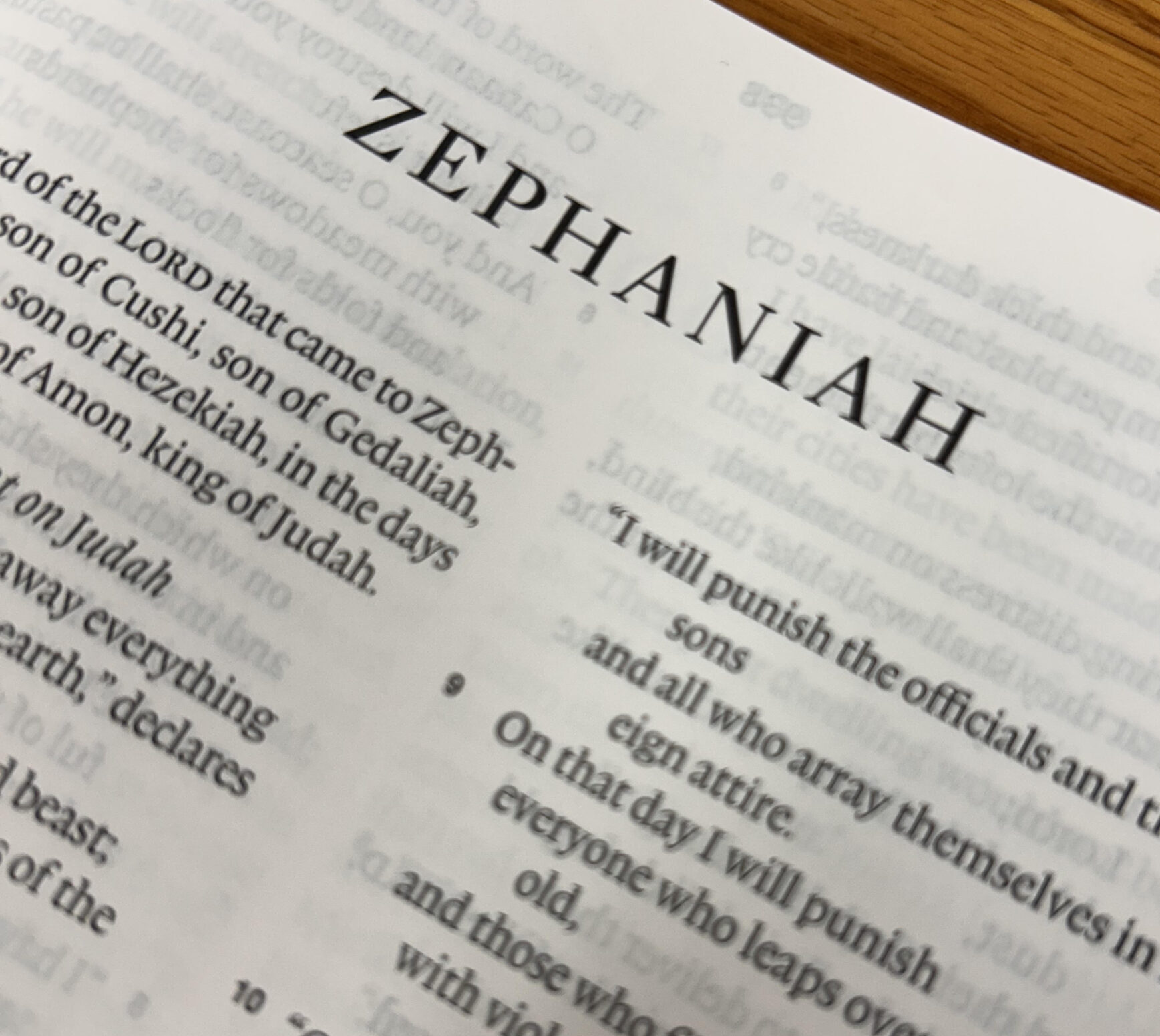
Text: Zephaniah 1:7-16; Matthew 25:14-30
Be silent before the Lord God! For the Day of the Lord is near. – v. 7
Lead In – These are the opening words of our text today from the prophet Zephaniah. They are words that cut against the grain of our modern sensibilities. We live in a world most uncomfortable with silence. Our lives are filled with noise. We plug in headphones while we walk; we turn on the radio the moment we get into the car; we scroll through endless feeds of digital chatter just to avoid being left alone with our thoughts.
I. Silence And the Context of Zephaniah
What’s with the discomfort with silence? Does the noise convince us that we are in control? Does it provide cover so we can formulate our excuses, defend our choices, and loudly justify our lives to anyone who will listen, including God?
So hear the prophet command an absolute cease-fire of human noise: “Be silent before the Lord God!” Why? Because the Court of Heaven is in session. The Sovereign Lord has entered His temple, not to hear our sorry excuses, but to render a verdict. The Law has spoken, and before a holy God, every human mouth is stopped.
To understand why this word comes with such force, it will be helpful to recall what was happening in Judah during Zephaniah’s ministry. Zephaniah preached during the reign of King Josiah. Josiah was a good king who launched massive religious reforms. He tore down pagan altars and cleaned out the temple. On paper, things looked fantastic. The pews were full again. By all appearances, religion was up and running again.
II. The Law: Awful Reality of the Day of the Lord
But God does not judge by outward appearances. Beneath the surface of Josiah’s reforms, the hearts of the people remained unchanged. They had fallen into a deadly trap. They wanted the benefits of God’s covenant, while at the same time living like the rest of the world. They were playing at religion, treating worship as a superficial social routine while their actual trust, identity, and security were anchored in pagan culture.
The prophet exposes this hypocrisy immediately in verse 8: “And on the day of the Lord’s sacrifice—’I will punish the officials and the king’s sons and all who array themselves in foreign attire.’” By foreign attire we are not talking of mere fashion. Clothing in the ancient world designated identity and allegiance. By dressing like the neighboring pagan nations, the leadership of Judah was signaling that they wanted to look like, think like, and be like the world. They were ashamed of the distinct identity God had given them. They wanted to blend in.
How easily we fall into the same trap. We wear the “foreign attire” of our secular age. We adopt the world’s definitions of success, the world’s morals, and the world’s anxieties. We come to church on Sunday, but Monday through Saturday we put on the uniform of a culture that completely ignores its Creator. We seek our identity in our careers, our political tribalism, or our financial status, trying to blend seamlessly into a world that is passing away.
And notice what this spiritual compromise produces. It produces complacency. Look at verse 12: “At that time I will search Jerusalem with lamps, and I will punish the men who are complacent, those who say in their hearts, ‘The Lord will not do good, nor will he do ill.’” These people hadn’t formally renounced God. They hadn’t become card-carrying atheists. They were practical atheists. They operated under the assumption that God was indifferent. They mutter, “The Lord won’t do good, and He won’t do ill.” In other words: God doesn’t care. He’s distant. He’s not going to intervene. My small compromises, my hidden sins, my worldly desires, they don’t really matter. Life goes on just fine without Him.
But the text warns us that the Lord comes searching with lamps. He shines the light of His Law into the dark corners of our hearts where our complacency has settled. He exposes the sins we thought we buried. He reveals that our comfort isn’t peace at all; it is just spiritual stagnation.
And for those who remain settled in their complacency, the Day of the Lord arrives as a nightmare. Hear the terror of verses 14 through 16: “The great day of the Lord is near, near and hastening fast; the sound of the day of the Lord is bitter; the mighty man cries aloud there. A day of wrath is that day, a day of distress and anguish, a day of ruin and devastation, a day of darkness and gloom, a day of clouds and thick darkness…”
This is the hammer of God’s Law, meant to crush every ounce of human self-righteousness. Under the weight of God’s holy wrath against sin, all human achievements crumble. Wealth cannot buy your way out. Verse 13 warns their goods shall be plundered and their houses laid waste. Political power cannot shield you; the fortified cities and high battlements are brought low. Even the “mighty man,” the strongest among us, is reduced to bitter crying. The Law strips us of our foreign attire, exposes our nakedness, and leaves us standing in terrified, absolute silence.
If the book of Zephaniah ended at verse 16, we would be entirely without hope. The Law has done its perfect work: it has diagnosed our terminal condition. We cannot clean ourselves up. We cannot stand before the light of the lamps.
But look closely back at verse 7. Hidden right in the middle of that terrifying command to be silent is a beautiful, prophetic whisper of the Gospel: “Be silent before the Lord God! For the day of the Lord is near; the Lord has prepared a sacrifice and consecrated his guests.”
III. The Gospel: The Sacrifice Prepared
In the immediate context of Judah’s judgment, that sacrifice meant the destruction of the wicked. But through the eyes of the New Testament, through the lens of the cross of Jesus Christ, these words take on a breathtaking, saving depth.
Who is the ultimate sacrifice prepared by the Lord? It is not you. It is not your good intentions, your moral efforts, or your religious resume. The sacrifice prepared from the foundation of the world is the Lamb of God, Jesus Christ.
God’s holy wrath against sin is real. It cannot be ignored, and it cannot be swept under the rug. The Law demands justice. But on the Cross, Jesus Christ stepped into the path of that oncoming storm. He took the “day of wrath, distress, and anguish” upon Himself. On Good Friday, the sky literally went dark, as described in verse 15, “a day of darkness and gloom, a day of clouds and thick darkness.” This fell upon the Son of God. He cried aloud in bitterness on the cross so that you would never have to. He was plundered, ruined, and devastated in our place.
This is what Lutheran theology calls the ‘Great Exchange’. Christ takes your sin, your complacency, your “foreign attire,” and your judgment; and in return, He gives you His perfect righteousness.
And notice what verse 7 says next: He has “consecrated his guests.” To consecrate means to make holy. How are you made holy? Not by pulling yourself up by your spiritual bootstraps. You are consecrated by the blood of the Sacrifice. In Holy Baptism, Christ took off your dirty, tattered rags and clothed you in the white robe of His own spotless perfection. When God looks at you now, He doesn’t see the dirt of your complacency; He sees the holiness of His Son.
IV. Conclusion and Application
Brothers and sisters in Christ, we experience this reality every Sunday we gather here for the Divine Service. We begin our service by fulfilling the command of verse 7: we sit in silence, and we confess our sins. We admit that we have tried to wear the clothes of the world. We admit that we have been stagnant and complacent. We allow the Law to silence our excuses.
But then, the silence is broken by the beautiful proclamation of the Gospel. Your pastor stands before you and speaks the word of Absolution, insuring you that for the sake of Christ’s sacrifice, your sins are completely forgiven.
And then, as consecrated guests, you are invited to a different kind of sacrificial feast. You approach this altar to receive the very Body and Blood of the Sacrifice prepared for you, given and shed for the remission of your sins. Here, the Day of the Lord is turned entirely inside out. It is no longer a day of ruin and devastation; it becomes a day of rescue, restoration, and endless grace.
Final Word – The Day of the Lord is indeed coming. For a world settled in its own self-sufficiency, it will be a day of terrible awakening. But for you who are hidden in Christ, you need not fear the darkness. Your King is silent no longer. He has spoken His verdict over you, and His verdict is “Not Guilty.” Step out of the silence of fear, and into the song of the redeemed. Amen.
The peace of God which passes all understanding guard and keep you in the true faith unto life everlasting. Amen.